
People and Team Development for Lasting Performance
Let’s Talk Talent grows individuals and teams together, so performance actually holds. We design employee development programs, team performance interventions, LEGO® SERIOUS PLAY® sessions, and away days for organizations across the UAE and internationally, built around real work and the multicultural teams that make up most UAE workplaces.
Individual growth and team performance are the same investment viewed at two scales. Develop a person and send them back to a dysfunctional team, and the investment is wasted. As part of our wider HR and organizational consultancy, we build capability in people and their teams, integrating coaching and assessment, management and leadership development, and performance management conversations that make it stick.
How Let’s Talk Talent Can Help Your Team
People & Team Development Services
Every people and team development engagement we run starts with business context rather than a catalog. We want to know what the team is being asked to deliver, where individuals are stretched beyond their current skills, what the last development initiative achieved, and what will be different in 12 months. Only then do we scope the work, and we’ll tell you honestly if the answer is a team intervention rather than more training, or the other way round.
The services below are modular and blended. You can commission a single team away day, a rolling program of people development workshops, or a combined engagement that develops a leadership team collectively while coaching its members individually. Delivery runs through webinars, interactive workshops, focused sprints, intensive bootcamps, bespoke programs, one-to-one and group coaching, and live and online 360-degree feedback, delivered in person, virtually, or in hybrid formats across Dubai, Abu Dhabi, the wider UAE, and beyond.
Employee & People Development Programs
Practical development your people use on the Sunday after, not learning they forget by next week.
Most employee development efforts fail for an unglamorous reason: they are generic. A program bought off the shelf teaches communication in the abstract to a room whose real problem is one specific handover between two specific functions. People notice, and the next initiative starts with a credibility deficit.
We design development around the human-centric skills that actually shift performance: self-awareness, communication, resilience, influence, feedback, decision-making, and the confidence to take up space, including across cultures and hierarchies that shape what “speaking up” looks like. These are the skills that make collaboration work, and they are the ones most likely to be assumed rather than taught. We use assessment to ground the work, drawing on over 40 tools, including Hogan, Saville Wave, Insights, DISC, GC Index, Voiceprint, 16 Personalities, and High5, so people start from evidence about themselves rather than a guess.
The strongest development happens inside real work rather than alongside it, so we design programs around live challenges: the handover between two functions that keeps failing, the account nobody wants to lose, and the project someone has just been handed that is a size bigger than anything they have run. Hypothetical case studies are easier to build and easier to forget. Working on the real thing does two jobs at once: people get better at what they are being paid to do now, and they generate evidence of what they could take on next, which is a great deal more reliable than a manager’s hunch about who is ready. That evidence is exactly what makes performance management conversations worth having, and it is what turns a development plan into a bigger role rather than a certificate. Development is also a retention lever, and in the UAE labor market that lever matters. People stay where they can see themselves growing.
Where the question is about progression routes, capability frameworks, and career pathways, that sits with our careers and capability pillar, and we work across the two so the development and the pathway point in the same direction.
- Self-awareness and personal impact, grounded in psychometric and strengths profiling
- Communication, influencing, and difficult conversations across cultures
- Resilience, well-being, and growth mindset
- Feedback skills: giving it, asking for it, and acting on it
- Personalized coaching for confidence, transition, and stretch
Best for: newly promoted specialists; high-potential cohorts being prepared for bigger roles, including Emirati talent on development pathways; and organizations whose engagement data shows development as a top concern.
Team Development & Team Performance
Diagnose what is actually happening in the team, then fix that.
Teams rarely underperform for the reason they think. The stated problem is usually communication. The real problem is often unclear goals, unspoken disagreement about priorities, or two people who stopped trusting each other eighteen months ago and have quietly routed around each other since.
Let’s Talk Talent starts with diagnosis. We use one-to-one interviews, team assessments, psychometric and strengths profiling, the Emotional Culture Deck, and our live and online 360-degree feedback programs to build an evidence-based picture of how the team really works. We then design the intervention that matches it: facilitated sessions, team coaching, skills workshops, or a longer program across several months.
We work with Tuckman’s forming, storming, norming, and performing model to make sense of where a team actually is, because the right support for a newly formed team is not the right support for one that has been stuck in storming for a year.
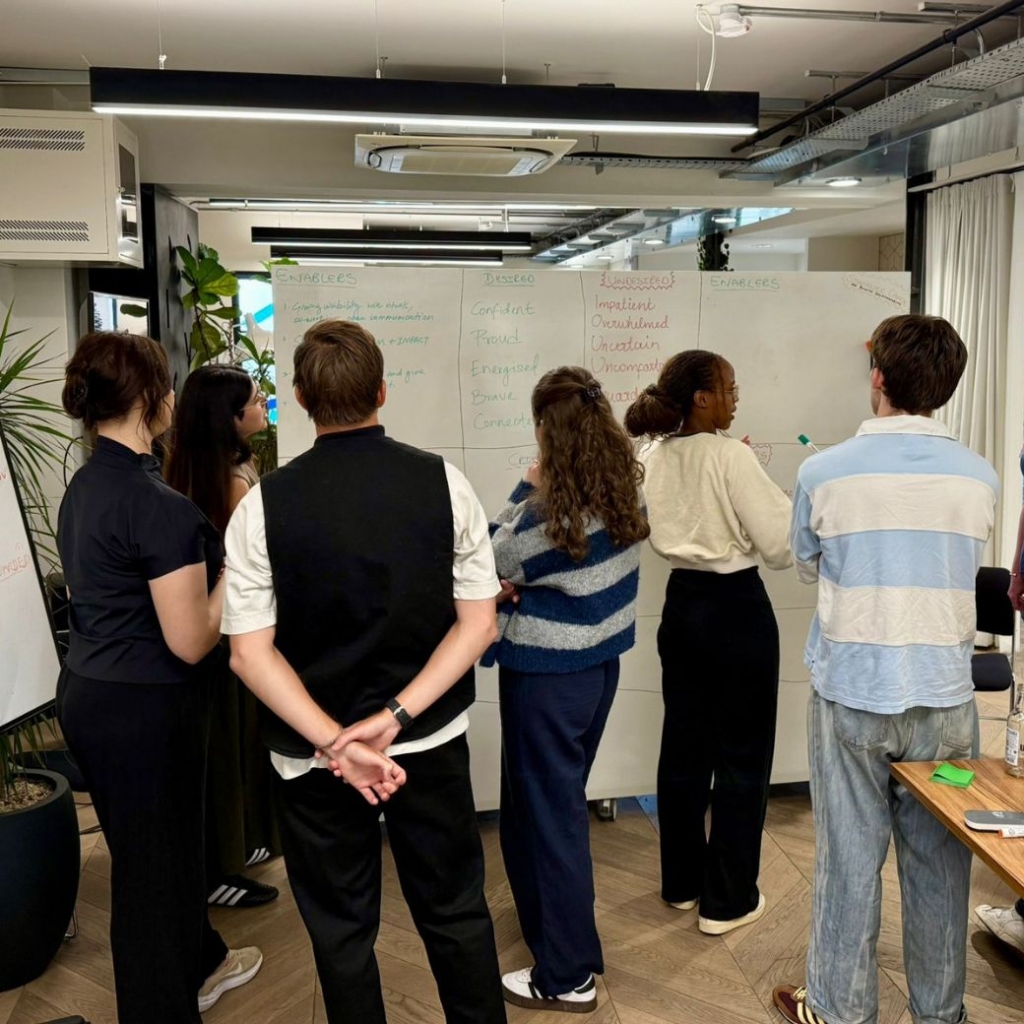
Newly formed teams need clarity and contracting. Storming teams needs conflict surfaced and structured. Norming teams need stretching. Performing teams need protection from complacency and from their own success.
- Team diagnostics: interviews, assessments, and 360-degree feedback
- Purpose, goals, and role clarity: who decides what and how
- Trust, psychological safety, and constructive conflict across cultures
- Team communication norms and ways of working, including hybrid teams
- Team coaching for leadership teams and cross-functional groups
Best for: newly formed or newly merged teams, senior leadership teams that are not aligned, and cross-functional teams where handovers keep failing.
Team Away Days, Immersive Experiences & LEGO® SERIOUS PLAY®
Corporate team building with a purpose beyond the day itself.
There is a version of team building that is a nice day out and changes nothing on Sunday. That is not what we do. Our away days and immersive experiences are designed backward from a specific outcome: a strategy the team can actually articulate, a conflict resolved, a set of behaviors agreed upon, or a new team that knows how it is going to work together.
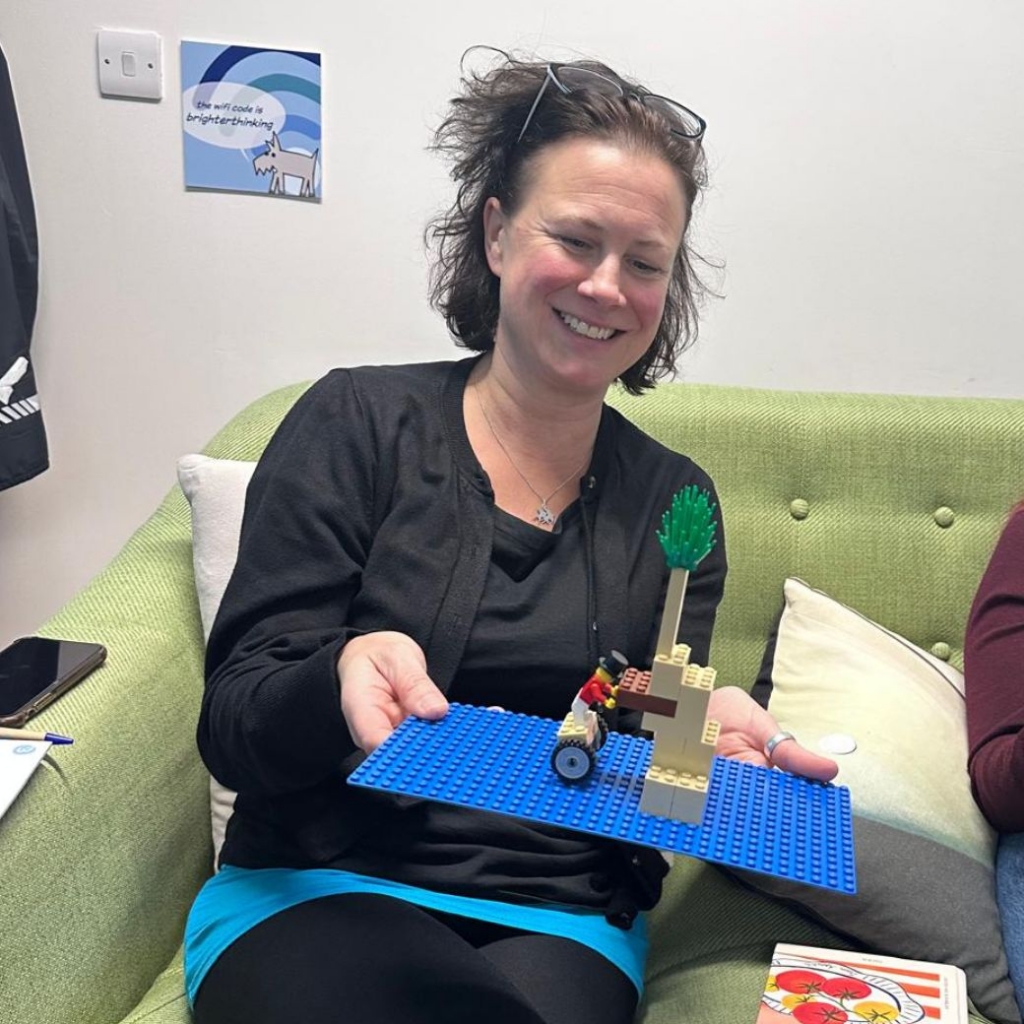
LEGO® SERIOUS PLAY® is a facilitated method in which participants build models in LEGO® bricks to represent ideas, challenges, and relationships, then use those models to explain their thinking to each other. It sounds unlikely, and it works, because it encourages quieter people to contribute and makes abstract disagreements visible, which is particularly useful in multilingual, multicultural teams where a spoken discussion can privilege the loudest voice or the strongest English speaker. Let’s Talk Talent runs it as a certified approach rather than an icebreaker.
Let’s Talk Talent delivers away days in person and virtually, for teams of six and for whole departments. Every session ends with commitments, owners, and a follow-up mechanism, because the risk with immersive work is that people love the day and then nothing changes. When a team needs collaboration frameworks and high-performance habits rather than a single day, we run collaboration and high-performance workshops, including a high-performance culture workshop.
- Facilitated LEGO® SERIOUS PLAY® sessions for strategy, identity, and problem-solving
- Team away days, virtual and in person, built around a defined outcome
- Team charters, values, and behaviors workshops
- Newly formed and newly merged team launch sessions
- Strategy translation days: turning a plan into what the team does differently
Best for: leadership teams setting direction for the year, teams re-forming after restructuring, and organizations wanting corporate team building that produces decisions rather than photographs.
What is People Development?
People development is the practice of deliberately growing an employee’s skills, self-awareness, and capability so they perform better now and are ready for what comes next. It is broader than training. Training transfers a defined skill; people development builds the underlying capability, behavior, and confidence that make the skill usable under pressure.
In practice, people development covers workshops, bootcamps, coaching, mentoring, stretch assignments, psychometric and strengths assessments, 360-degree feedback, and on-the-job learning. It is closely related to talent development, which typically refers to the same activity applied to identified successors and high-potential populations. Both sit within the wider discipline of learning and development.
What people development is not: a one-off course, a compliance module, or a budget line spent in Q4 because it was allocated. It is also not the same as performance management, which focuses on setting expectations and reviewing performance. That now lives on our performance management pillar, and the two work best when they are joined up rather than run by different people in different systems.
What is team development?
Team development is the structured process of improving how a group of people works together by building a shared purpose, clear roles, trust, and effective ways of working so the team delivers more than its members could individually. It usually combines diagnosis, facilitated sessions, and ongoing team coaching. Let’s Talk Talent uses Tuckman’s forming, storming, norming, and performing stages to identify where a team is before deciding what it needs, because the intervention that helps a new team will frustrate an established one.
Why People & Team Development Matters to Your Business
Productivity that comes from the system, not from effort
Teams with clear goals and complementary strengths stop duplicating work and stop waiting on decisions nobody owns.
Better problem-solving and innovation
Diverse perspectives only improve decisions when the team is safe enough to voice them, which is what team development builds. In multicultural UAE teams, that safety often needs to be designed in rather than assumed.

Retention you do not have to buy
People stay where they are growing and where they like the people they work with. Development and team health are the two levers you control.

Skills that transfer to the day job
Practical, human-centric skills such as feedback, influence, and resilience get used immediately rather than filed away.

A team worth being in
Trust, psychological safety, and honest communication make work less exhausting and make good performance repeatable.

Visible investment in their future
Coaching, assessment, and stretch send a clearer signal about how much someone matters than any engagement campaign.
How Let’s Talk Talent Approaches People & Team Development
Every engagement runs through four stages. We agree on the measures at the start, take a baseline before anything begins, and report against it afterward.
1. Discover—We understand the business context, the team’s remit, the pressures on it and what development has already been tried through conversations with leaders and stakeholders. Typical timescale: 1 to 2 weeks.
2. Diagnose—We gather evidence with one-to-one interviews, team assessments, psychometrics such as Hogan, Saville Wave, or Insights, strengths profiling, and live or online 360-degree feedback, and we set baseline metrics. Typical timescale: 2 to 4 weeks.
3. Design—We design a bespoke blend of workshops, sprints, bootcamps, away days, LEGO® SERIOUS PLAY® sessions, and coaching, matched to the team’s stage and the individuals in it. Typical timescale: 2 to 3 weeks to design, with delivery scheduled around your operating rhythm.
4. Deliver & Embed—We deliver, gather feedback as we go and adapt, then embed through team charters, manager follow-up, coaching, and repeat measurement. Typical timescale: intensive engagements run 6 to 12 weeks; partnership programs run across a full year.
The embedding stage is where most development spend is won or lost.
Our Clients
Let’s Talk Talent has developed people and teams for organizations, including BUPA, Netflix, London Business School, Kings College London, Vodafone, Callidus Consulting, and M Group, from senior leadership teams to first-time managers to whole departments going through change.

People & Team Development FAQs
What is team development?
Team development is the structured process of improving how a group works together by building shared purpose, role clarity, trust, and better ways of working. Let’s Talk Talent begins with diagnosis rather than activity, using interviews, team assessments, and 360-degree feedback to find the real blocker. We then design the intervention that fits, whether that is a facilitated session, a team development program over several months, or team coaching.
What is the difference between people development and team development?
People development grows the individual; team development improves how individuals work together. Let’s Talk Talent treats them as one investment at two scales: developing someone who returns to a dysfunctional team wastes money, and fixing a team without growing its members does not last. That is why this pillar covers both and why most of our engagements include elements of each.
Why does team performance matter to my business?
Because team performance determines how much of your people’s individual capability actually reaches the customer. Poor team dynamics show up as delayed decisions, duplicated work, avoidable escalations, and attrition among your best people. In a high-mobility market like the UAE, that attrition is faster and more expensive. Let’s Talk Talent focuses on the specific causes in your team rather than generic teamwork theory and sets baseline metrics first so you can see what changed.
Who is people and team development for?
It is for HR leaders and people directors buying for the organization and for team managers and department leaders buying for their own team. Let’s Talk Talent works with C-suite and senior leadership teams, people and talent leads, cross-functional project teams, and first-line managers across SMEs, free zone businesses, and large multinationals. If you are also building management capability, our management and leadership pillar sits directly alongside this one.
What is LEGO® SERIOUS PLAY®, and when would we use it?
LEGO® SERIOUS PLAY® is a facilitated method in which people build models in LEGO® bricks to represent ideas, challenges, and relationships, then use them to explain their thinking. Let’s Talk Talent uses it when a team needs to surface something difficult, agree on an identity, or turn strategy into shared understanding. It works particularly well with mixed-seniority groups and multilingual teams, because the bricks give quieter voices a way in.
Can you deliver development across the UAE and globally?
Yes. Let’s Talk Talent delivers workshops, bootcamps, coaching, diagnostics, and away days in person, virtually, and in hybrid formats, with around 30 years of global experience. Virtual team development works well when it is designed for the format rather than transplanted from an in-person setting, and we build sessions around time zones and distributed working patterns. Where in-person delivery matters most (usually team conflict and leadership alignment), we will say so.
How long does a people or team development program take?
It depends on the goal. Let’s Talk Talent runs single-away days, intensive engagements lasting 6 to 12 weeks, and year-long partnership programs in which development is continuous. Diagnosis typically takes 2 to 4 weeks before delivery begins. We would rather scope a short, focused piece of work that demonstrates value than sell a program your organization lacks capacity to absorb.
How do you measure the impact of team development?
Let’s Talk Talent sets baseline metrics before anything starts, then measures against them. Typical measures include engagement scores, retention and turnover in the affected team, speed of project delivery, collaboration and handover metrics, psychological safety, and pre- and post-assessment or 360-degree feedback data. We also gather qualitative evidence from managers and team members because some of the most important changes show up in behavior before they appear in dashboards.
How does development connect to careers and performance reviews?
Closely, and it has to. The test of any development program is whether it changes what someone delivers and what they are trusted with next; anything else is a pleasant few days out of the office. Career pathways, capability frameworks, and progression routes live on careers and capability, and objective setting, reviews, and performance frameworks live on performance management. Let’s Talk Talent deliberately connects the three, because development without a pathway frustrates people, a pathway without development is a promise you cannot keep, and performance conversations are where you find out whether either is working.
How can Let’s Talk Talent help with employee development?
Let’s Talk Talent designs employee development around evidence, using psychometrics, strengths tools, and 360-degree feedback to establish where people actually are, then delivers through workshops, sprints, bootcamps, and personalized coaching. We focus on human-centric skills that transfer to the day job, and we build the team conditions that let those skills survive contact with reality. Scope and investment are agreed after a free discovery conversation.
Ready to Grow Your People and Your Teams Together?
Tell us what your team is struggling with and what you need it to be capable of, and we will tell you honestly whether the answer is development, diagnosis, or something else entirely. Scope and investment are agreed after a discovery conversation, and the first conversation is free.
Case Studies
Building an aligned, culture-driving senior leadership team for a high-growth investment firm—a leadership team aligned around shared direction and behaviours, so growth did not outpace the culture.
Revitalising organisational values and behaviours at the UK’s largest library—values and behaviours redefined with employees and built into everyday team practice.
Empowering career growth amid organisational change for a global mass media conglomerate—individual development sustained through a major restructure, keeping people engaged while the organisation shifted.
More client work sits in our case study library.
People & Team Development Resources
We publish practical guidance for HR leaders, people directors, and team managers who have to make development work with real budgets and real diaries. Start with these.
What Makes a High-Performing Team—the characteristics that separate high-performing teams from busy ones, and how to build them deliberately.
How Do I Stretch My Team to Expand Their Capability?—practical ways to grow capability through the work itself rather than through more courses.
10 Ways to Modernise Your Learning and Development Strategy for the Modern Workforce—how to move development away from formats your people quietly ignore.
Is the 70-20-10 Model Still Relevant to Learning and Development? — an honest look at whether the classic learning ratio still holds up.
Everything else lives in our learning and insight hub.