
Coaching and Assessment for Growth at Every Level
Let’s Talk Talent delivers executive, leadership, and team coaching; 360-degree feedback; and psychometric assessments, using over 40 tool-agnostic assessment tools, for organizations across the UAE, in person, virtually, or in hybrid formats. Most organizations invest heavily in coaching a handful of senior leaders and almost nothing in everyone else, a gap that gets expensive fast in a workforce spanning 10 nationalities on a single team.
We bring coaching and assessment together so potential gets spotted with rigor and turned into performance people can see in the day job. It feeds directly into how you build management and leadership capability, evidence career and capability frameworks, and sharpen performance management conversations at every level.
How Let’s Talk Talent Can Help Your Team
Coaching and Assessment Services
Every coaching and assessment program we design starts with business context, not with a catalog. We want to know what is actually happening: the leadership transition that isn’t landing, the team that has stopped challenging each other, the appraisal cycle that produces polite fiction. Only then do we recommend a coaching model or select an assessment. Our consultancy practice is built around that sequence, and our approach to working with clients keeps you closely involved in the design throughout.
Delivery is modular and blended. A single leader might take six one-to-one sessions. A management population might get on-demand coaching alongside a practical management bootcamp. A senior team might start with a live 360, move into team coaching, and finish with a facilitated away day. We deliver in person, virtually, and in hybrid formats across UAE, regional and global populations, and we integrate coaching into wider learning and development programs wherever it helps learning stick.
Coaching on Demand and One-to-One Coaching
Accessible, flexible coaching for the people who never usually get any.
Coaching on Demand is a flexible model that gives your people access to a qualified coach when they need one, without a long program or a long commitment. Sessions are typically 60 minutes, delivered virtually, and booked as needed, whether before a difficult conversation, during a promotion, or after a restructure. It removes the two barriers that usually stop coaching from reaching beyond the executive floor: cost and calendar. One-to-one coaching goes deeper.
Here, a person works with the same coach over a series of sessions towards a defined goal, whether stepping up into a first management role, rebuilding confidence after a setback, or preparing for a role that is two sizes bigger than the one they are in. Goals are agreed at the start, revisited throughout, and shared with the line manager where the individual is happy for that to happen. Chemistry matters more than credentials. Our coaches come from real operational and HR backgrounds, and we always offer a choice so people can work with someone they genuinely click with. That single decision does more for coaching outcomes than any framework.
- Career navigation, internal moves and promotion readiness
- First-time manager transitions and stepping up to lead peers
- Confidence, presence and imposter feelings
- Difficult conversations, feedback and conflict
- Resilience, workload and sustainable performance
Best for: organizations extending coaching beyond the C-suite; high-potential and emerging talent populations, including Emirati talent on development pathways; managers in the middle carrying the most change.
Executive, Leadership and Team Coaching
Sharper thinking at the top, and teams that actually behave like teams.
Executive coaching is one-to-one coaching for senior leaders (directors, executive committee members, founders and functional heads), focused on the decisions, relationships and behaviors that only they can change. At this level, the work is rarely about skill. It is about how a leader uses their attention, how they land with the people around them, and what they are avoiding.
Leadership coaching extends the same thinking to the wider leadership population: senior managers, heads of function and newly promoted directors who need to lead through others rather than do the work themselves. It pairs naturally with structured management and leadership development, where coaching turns classroom learning into changed behavior back in the business.
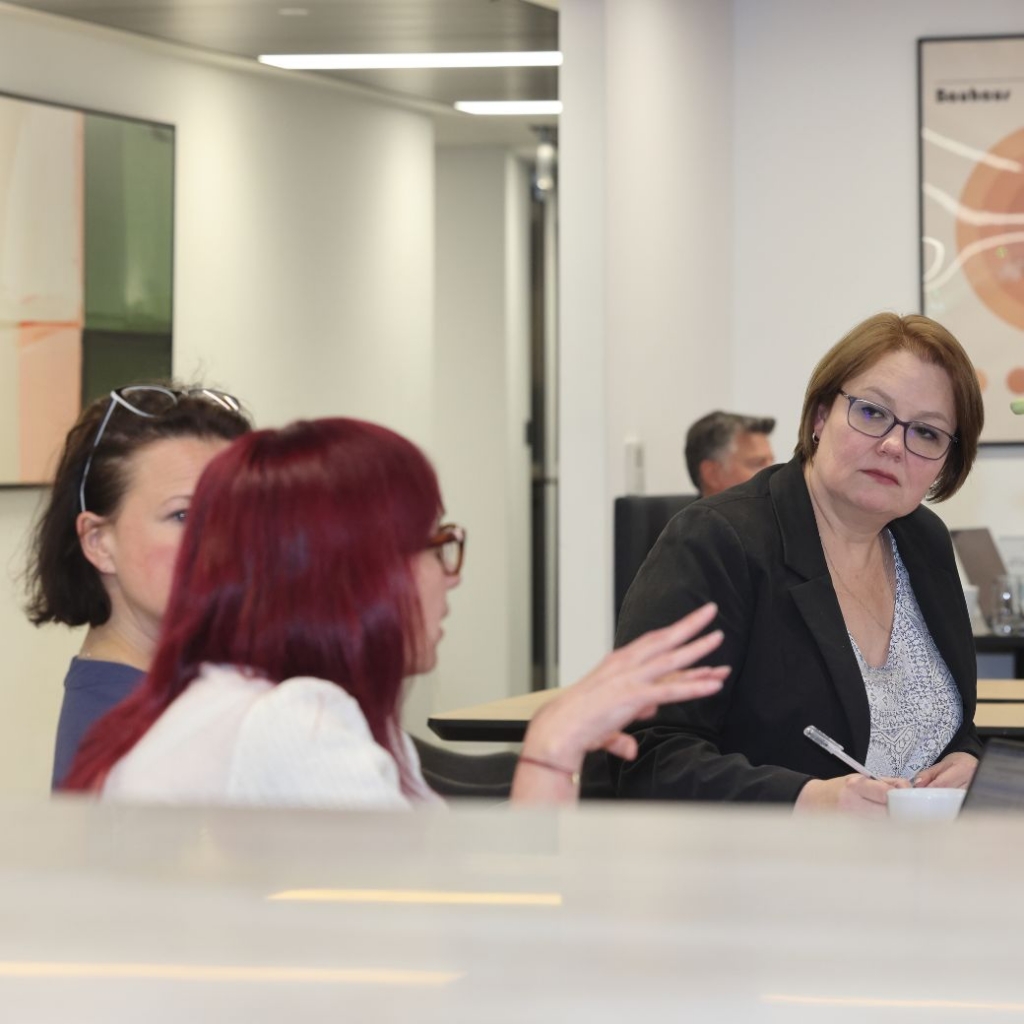
Team coaching treats the team itself as the client. We work with an intact leadership team to understand how they make decisions, how they handle disagreement, and whether they are genuinely aligned around the same few priorities. It is often the fastest route to unblocking a strategy that looks fine on paper and works well alongside team development work and facilitated away days.
- Leadership transitions, first 100 days and role expansion
- Executive presence, influence and stakeholder management across cultures
- Strategic thinking and decision quality under pressure
- Team alignment, trust and constructive challenge
- Leading through change, restructure and rapid growth
Best for: newly appointed executives; senior leadership teams that have grown fast and never formed properly; leaders inheriting a team mid-transformation.
Psychometric Assessment and 360-Degree Feedback
Over 40 tools. None of them are on our agenda.
We use over 40 assessment tools, and we’re deliberately tool-agnostic. We’re not a reseller for a single publisher, so the assessment is chosen to fit the outcome rather than bending the outcome to fit the assessment. If a leadership population needs to understand derailment risk under pressure, we’ll reach for Hogan. If the question is how someone contributes to making things happen, the GC Index answers it better. That independence is the whole point.
Our psychometric range includes Hogan, Saville Wave, the Korn Ferry Leadership Architect (KFLA), Voiceprint, the GC Index, DISC, Insights and the Emotional Culture Deck, alongside strengths-based tools such as 16 Personalities and High5. We also run our own live and online 360-degree feedback programs, and use LEGO® SERIOUS PLAY® where a team needs to surface something they cannot say out loud. Assessment is only ever half the job, so every tool we use is debriefed by a qualified practitioner and turned into a development plan.
| Tool | Typically used for |
|---|---|
| Hogan | Leadership potential, derailment risk, values fit |
| Saville Wave | Work styles, motives and performance prediction |
| Korn Ferry Leadership Architect (KFLA) | Competency frameworks and leadership benchmarking |
| Voiceprint | How people use their voice and influence in meetings |
| GC Index | Contribution to making an impact and creating change |
| DISC / Insights | Communication style and team dynamics |
| Emotional Culture Deck | Naming the culture and feelings a team wants |
| 16 Personalities / High5 | Accessible strengths and self-awareness starters |
| Live and online 360 | Multi-rater feedback on real observed behavior |
What is 360-Degree Feedback?
360-degree feedback is a structured process in which an individual receives feedback on their behavior and impact from the people around them (their manager, peers, direct reports, and sometimes clients), alongside their own self-assessment. The value is in the gap: the distance between how someone believes they show up and how others experience them.
Live 360 vs Online 360
An online 360 collects feedback through a confidential questionnaire and produces an aggregated report, which a facilitator then debriefs the individual on. It is efficient, scalable, and well-suited to large populations or to a whole management layer at once.
A live 360 replaces the questionnaire with conversation. A Let’s Talk Talent facilitator interviews the individual’s raters directly, probes the answers, gathers examples rather than scores, and then feeds the themes back in a structured session. It surfaces the things people will never write down, often the most useful feedback in a multicultural environment, where people may be reluctant to commit criticism to a form. It is also far harder to dismiss.
Assessment Spots Potential. Coaching Converts It.
A 360 gives you evidence of two things at the same time: how someone is landing right now, and what they could do differently next. That is what makes assessment a more rigorous way of identifying potential than the usual method of reputation: who is visible, who presents well, who works near the people making the decision. Evidence about behavior, motives and impact tells you far more about what someone could become than a track record alone, because a track record only shows what the current role happened to ask for.
Then it has to be converted, and this is where most assessment spend is lost. A report lands, everyone agrees it is insightful, and nothing changes in how the person works on Sunday.
Potential identified, nothing built. Coaching is the mechanism that turns what the data suggests into behavior colleagues actually notice, which is why we never run an assessment without a debrief, a development plan, and someone accountable for the follow-through. Where that evidence should shape objectives and review conversations, it feeds your performance management practice; where it should open a route to a bigger role, it feeds careers and capability. Each side makes the other more accurate.
- Individual and team psychometric profiling with qualified debrief
- Live and online 360-degree feedback programs
- Leadership benchmarking and leadership performance assessment
- Team profiling to explain conflict, duplication and blind spots
- Assessment data feeding talent reviews and succession planning
Best for: senior teams that need honest feedback fast; organizations building a talent picture ahead of succession decisions; leaders whose self-perception and reputation have drifted apart.
What is the Difference Between Coaching, Mentoring and Consulting?
Coaching, mentoring, and consulting all develop people, but they differ in who holds the answer: a coach helps you find your own, a mentor shares what worked for them, and a consultant gives you expert recommendations to act on. Getting the distinction right matters, because organizations frequently buy one and expect the results of another.
– Coaching is facilitative. The coach asks questions, challenges thinking, and helps the individual or team reach their own conclusions, which is why the resulting behavior change tends to last.
– Mentoring is experiential. A more experienced colleague shares their own route, opens doors, and offers advice, usually within the same profession or organization.
– Consulting is advisory. An expert diagnoses the problem and recommends a solution, and is accountable for the quality of that recommendation.
None of the three is superior; they solve different problems, and most people need all three at different points in a career. A new manager might need mentoring on the unwritten rules, coaching to build their confidence, and consulting on the restructure they have been handed. In practice, Let’s Talk Talent does all three, but we are explicit about which one we are doing at any given moment because blurring the lines is what makes coaching programs fail. None of the three is superior; they solve different problems, and most people need all three at different points in a career. A new manager might need mentoring on the unwritten rules, coaching to build their confidence, and consulting on the restructure they have been handed. In practice, we do all three, but we’re explicit about which one we’re doing at any given moment because blurring the lines is what makes coaching programs fail.
Why Coaching and Assessment Matter to Your Business

Genuine Self-Awareness
People cannot change behavior they cannot see, and assessment gives them a clear, evidence-based view of their impact, including how they land across the multiple nationalities and working styles typical of a UAE workforce.

Confidence That Holds Under Pressure
Coaching builds the internal steadiness that lets people take on bigger roles, have harder conversations, and handle public setbacks in stride.

Development That Isn’t a Perk
On-demand and virtual formats put coaching within reach of emerging talent and middle managers, not just the executive floor.

Better Leadership Decisions
Executive and team coaching improves decision quality where it costs the most to get wrong.

Retention of the People You Cannot Replace
Investing in someone’s growth is the clearest signal you intend to keep them, and it shows in engagement and career growth data, a signal that matters especially in a market where people can and do move quickly.

A Feedback Culture That Sticks
360-degree feedback normalizes honest conversation, which strengthens performance management long after the program ends.
How Let’s Talk Talent Approaches Coaching and Assessment
1. Discover. We start with your business context, the in-scope population, and the behavior you actually need to change.
2. Diagnose. We select the right assessment or 360 format for that question, gather the data, and debrief with each individual.
3. Design. We match people to coaches, agree goals with the individual and the organization, and design the blend of one-to-one, group, and team work.
4. Deliver and Embed. We run the sessions, track progress against the agreed goals, and hand over development plans that line managers can continue to use.
Typical timescales: a psychometric or 360 cycle with debriefs usually runs across four to six weeks. Individual coaching engagements typically span three to six months. Team coaching and coaching-culture programs generally run six to twelve months to reach the point where the organization sustains it without us.
Our Clients
Let’s Talk Talent coaches and assesses people at organizations including BUPA, Netflix, London Business School, Nokia, Vodafone, LIWA Education and Securitas. We were named HR Consultancy of the Year and L&D Supplier of the Year at the Personnel Today Awards.




Coaching and Assessment FAQs
What is executive coaching?
Executive coaching is confidential one-to-one coaching for senior leaders, focused on the decisions, relationships, and behaviors only they can change. It typically runs for three to six months across six to eight sessions. Let’s Talk Talent pairs executive coaching with assessment or 360 feedback so the work starts from evidence rather than assumption, and connects it to your wider organization leadership development plans.
How does a coaching engagement actually work?
A coaching engagement starts with a chemistry check, followed by a goal-setting session with the individual and, where appropriate, their line manager. Sessions run every three to four weeks, with progress reviewed against those goals throughout. Let’s Talk Talent keeps the content of every session confidential while reporting themes and progress at the program level.
Can 360-degree feedback capture both current and potential performance?
Yes, and that is the most useful thing about it. A 360 closes the gap between how a leader believes they show up and how everyone around them experiences it, which is usually where the performance problem lives, and the same evidence tells you what that person could take on next and what would have to change first. Let’s Talk Talent runs both live and online 360s, and always pairs the report with a facilitated debrief and a development plan, because feedback without a conversation rarely changes anything.
Which psychometric assessment tools do you use?
Let’s Talk Talent uses over 40 assessment tools, including Hogan, Saville Wave, the Korn Ferry Leadership Architect, Voiceprint, the GC Index, DISC, Insights, the Emotional Culture Deck, 16 Personalities and High5, plus our own live and online 360 programs. We are deliberately tool-agnostic and not tied to one publisher, so we choose the assessment that fits your outcome.
Who is coaching for — is it only for senior leaders?
Coaching is for everyone, at every level, and treating it as a C-suite perk is the most common mistake we see. Let’s Talk Talent designs on-demand and group formats specifically so emerging talent, technical specialists, and middle managers can access coaching affordably. The people carrying the most change are usually the ones with the least support, which is why we build coaching into people and team development too.
Can coaching and 360 feedback be delivered across the UAE and internationally?
Yes. Let’s Talk Talent delivers coaching and assessment in person, virtually and hybrid, across the UAE, the wider GCC and internationally. On-demand coaching is virtual by design, and online 360s scale easily across time zones and languages. Live 360 interviews run just as well by video call. We regularly support global organizations alongside their wider change and transformation work.
How long does a coaching or assessment program take?
A psychometric or 360-degree feedback cycle with individual debriefs typically takes four to six weeks from launch. Individual coaching engagements usually run three to six months, and team or coaching-culture programs run for six to twelve months. Let’s Talk Talent scopes timescales around your calendar and business cycle, not a fixed template.
How do you measure the impact of coaching and assessment?
Impact is measured against goals agreed at the very start, then tracked through progress check-ins, participant feedback and observable behavior change. Let’s Talk Talent typically agrees KPIs covering confidence, communication, promotion readiness, retention, and specific business outcomes, and can re-run a 360 to evidence the shift. We align this with your existing performance management data wherever possible.
What support is available once a program finishes?
Development plans are handed to the individual and their line manager so the work continues in day-to-day conversations, and many clients keep an on-demand coaching pool open afterward. Let’s Talk Talent also trains managers in coaching skills through communication and leadership workshops so the capability stays in-house. Refresher sessions and follow-up 360s are available whenever you need them.
How can Let’s Talk Talent help with coaching and assessment?
Let’s Talk Talent brings practitioner-coaches, qualified assessors, and over 40 tools to whatever your organization is actually trying to change. We design coaching that reaches every level, run live and online 360s, and debrief every assessment so it becomes a development plan rather than a report. Programs are scoped and quoted after a discovery conversation, so book a free consultation.
Ready to Make Coaching Normal in Your Organization?
Tell us who needs developing and what needs to change, and we will recommend the coaching model and assessment that fit, or tell you honestly if you don’t need one. No obligation, no tool-pushing, just a practical conversation.
Case Studies
Live 360 assessments with Halcyon.ai — live, interview-based 360 feedback that gave leaders in a fast-scaling AI business an unfiltered view of their impact.
An aligned, culture-driving senior leadership team for a high-growth investment firm — assessment and team coaching that turned a group of strong individuals into a leadership team with one agenda.
Scalable management and leadership capability at ManyPets — coaching skills built into a management population growing faster than its experience.
More client work sits in our case study library.
Coaching and Assessment Resources
Our learning hub is where we publish the thinking, tools and templates behind this work — free, practical and written for people who have to make it happen on Monday morning.
Creating a Culture of Coaching Within Your Organisation — what has to be true structurally before coaching behaviour spreads beyond the coaches.
The Coaching Culture Shift: Why Senior Leaders Must Lead From the Front — why coaching cultures stall when the executive team exempts itself.
The Power of Three: How Managers, Mentors and Coaches Drive Career Growth — the three relationships every career needs, and how they differ.
Preparing Employees to Become Great Managers — the coaching and feedback skills that make the step into management survivable.
Everything else lives in our learning and insight hub.